Iliyana's Blog

Iliyana Stareva

Iliyana Stareva is a thought leader in Customer Success and AI. She’s the author of Inbound PR, a keynote speaker, and currently leads Customer Health for EMEA at ServiceNow. Iliyana has held global and regional roles at ServiceNow, Cisco, and HubSpot, spanning customer experience, operations, and digital transformation.

Recent Posts

The Benefits of Writing a Dissertation about PR

[fa icon="calendar'] 01-Dec-2014 04:04:00 / by Iliyana Stareva posted in University Experience, Public Relations

[fa icon="comment"] 0 Comments

PR is on the rise! With the ever growing importance of social media, storytelling and influencer relations for business, the public relations industry has a bright future.

So here’s my advice to all PR, communications, marketing or business students who are wondering what dissertation topic to choose: Write a dissertation about public relations.

Why write a dissertation about PR

It’s been over two years since I wrote my dissertation about PR and social media. However, my reserch findings are still relevant today. What’s more, publishing the results on this blog and creating a summary in the form of an infographic has driven tremendous interest from other students and professionals as well as some great endorsements. This has allowed me to make a name for myself and even build my own brand, especially after my PR dissertation was published as a book

Read More [fa icon="long-arrow-right"]

What Does Anthropology Have to Do with PR?

[fa icon="calendar'] 24-Nov-2014 09:00:00 / by Iliyana Stareva posted in Public Relations

[fa icon="comment"] 0 Comments

"Social media is less about technology and more about anthropology, sociology, and ethnography." – wrote Brian Solis in his book Engage. When I read that I was confused. Particularly with the anthropology bit and I thought to myself "What does anthropology have to do with social media and communications?" I did get it to a point, but I only fully got to grips with the idea once finishing a recent MOOC about anthropology. It was an enlightening experience and today I would like to share with you what I've learned.

Let's start with some definitions.

According to Philippe Bourgois, University Professor of Anthropology & Family and Community Medicine at the University of Pennsylvania:

"Anthropology is the study of humans by any means necessary ... to understanding what's around us, whether it's where we live or somewhere far away. The crucial thing is that anthropology has this insight; it brings to understanding human society and human culture, which is that everyone lives within their logic. Nothing is right or wrong. Our duty, to put it that way, as anthropologists, is to uncover the logic of the people or the setting that we want to understand."

As noted in the course materials, social or cultural anthropology is about people: the environments they inhabit and the things they get up to, examined from the bottom up, not top down to find different ways of seeing the world, inhabiting the world, and in fact different worlds altogether.

That's actually very similar to what PR is about. PR lives upon other people's behaviours and cultural interactions that are the very essence of one of the most fundamental PR activities – storytelling. This, in turn, goes hand in hand with Paul Stoller's definition of anthropology:

Read More [fa icon="long-arrow-right"]

How Exchanging Value Builds Dynamic Customer Relationships

[fa icon="calendar'] 17-Nov-2014 09:00:00 / by Iliyana Stareva posted in Brands and Business

[fa icon="comment"] 0 Comments

Relationships, relationships, relationships! How many times have you heard this or read about the importance of building relationships with prospects and customers, especially when talking about social media? Countless times I would guess. Well, like it or you'll continue hearing that magic word "relationships" in the years to come. Why? Simple: with the mainstream adoption of always-on real-time communications and information available at our fingertips, your customers demand that you know how you can add value and meaning to them in a highly personalised manner. Creating and delivering such value is at the heart of building relationships.

The reality, however, is that these value-adding, multidimensional relationships are rather a myth.

That's what Edelman reveals with the results of brandshare 2014. It's a study of 15,000 consumers in 12 developing and developed countries, across 11 industries, that sought to understand the evolving relationship between people and brands. The focus was discovering what drives value for business and for the consumer.

Examining brand behaviour and performance, Edelman found that there's actually little value exchange between brands and consumers. The majority of people believe their relationships with brands are one-sided (66%) and purely transactional, where consumers are solely contributors bringing benefits to the brand by buying, but not receiving much in return. Current interactions between consumers and brands add more value to brands than to consumers.

Read More [fa icon="long-arrow-right"]

What's Happening with Social Media, Journalism and PR?

[fa icon="calendar'] 10-Nov-2014 09:00:00 / by Iliyana Stareva posted in Social Media, Public Relations

[fa icon="comment"] 0 Comments

Do you remember what life was before social media? I'm a Millennial, so I find it a little bit difficult, but I suppose for the older generations painting a picture between then and now must be quite shocking, especially for those working in the media – either in PR and communications or in journalism. Describing what's changed, how and why is the easy part. Adopting these changes and adapting to the new way of business for an effective modus operandi at work is the difficult bit if you are not a digital native.

So, let's dive into some cool infographics and interesting research findings from a few new studies in the areas of social media, journalism and PR.

First stop: our daily activities before and after the emergence of social media.

Then and Now

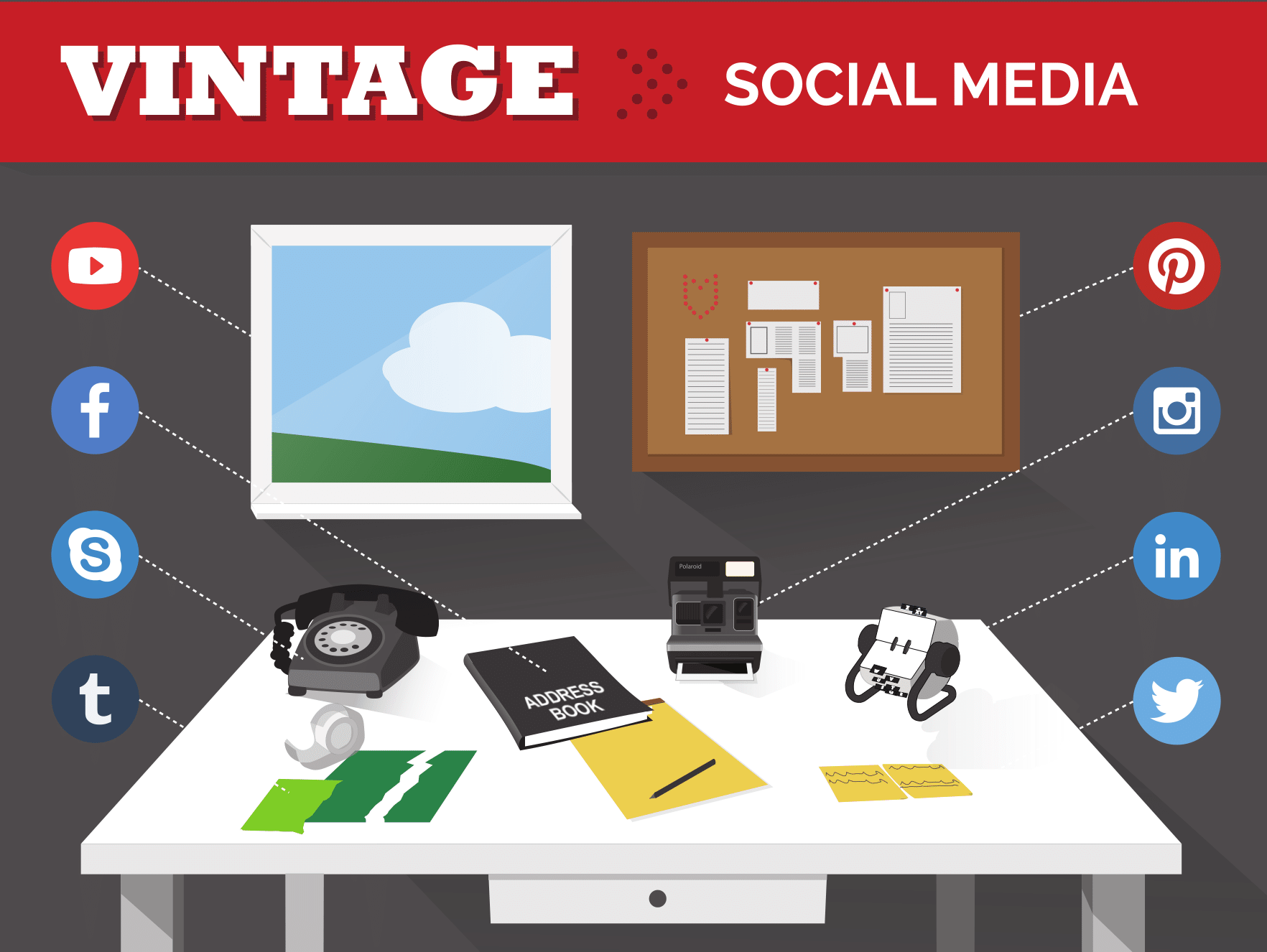
At the bottom of this post you can find an infographic from Zerofox that takes us a walk down memory lane, showing us what non-digital assets we used to rely on and their new social versions. Some of these include:

  • post-its –> our 140 character tweets
  • Polaroid cameras –> Instagram as our photo documentation tool of choice
  • cork boards –> our digital Pinterest boards
  • rolodexes –> our LinkedIn contacts

Funnily enough, I still have a cork board at home, but I use to pin little brochures or tickets from places I've been – for example the ticket from the amazing Sade concert I went to a few years back or the card I got from ShaunTerventionUK. So basically memories and things I've received offline, in real life, things you can touch.

Read More [fa icon="long-arrow-right"]

Hold Tight or Let Go? Brand Control Uncovered

[fa icon="calendar'] 03-Nov-2014 09:00:00 / by Iliyana Stareva posted in Brands and Business

[fa icon="comment"] 0 Comments

"The Secret Power of Brands" is one of the four MOOCs (massive open online courses) that I am currently doing. Very interesting indeed, so for anyone who is looking to learn more about branding, I can only recommend it. As part of the course materials, we were assigned last week to write a short piece answering the following question: To build a successful brand, is it better to control every aspect of the brand, or to encourage people to adopt it and adapt it? Here's how I answered:

In today's era of real-time, in-the-moment, everywhere-and-anytime world of online communications, brands no longer hold control over their reputation. Organisations do indeed control internal activities such as manufacturing, supply chain management, finance and even corporate communications that allow them to ensure expected quality of products and services, but the way their brand is seen and experienced externally is now defined by consumers. As Brian Solis says,

“Businesses are no longer the sole creator of a brand; it is co-created by consumers through shared experiences and defined by the results of online searches and conversations.”

Brands have no physical objectivity. They sell a way of life. The asset of a brand is that dream that exists in the heart and soul of the customer and her experiences of it, shared in the online space.

Read More [fa icon="long-arrow-right"]

Subscribe here!

New call-to-action
New call-to-action

Get Social

inbound-pr-winner-new-pr-books
Blog Awards 2018_Winners Silver MPU

Popular Posts

Public Relations Today

Want to talk?

Iliyana Stareva headshot

I'm always happy to chat about how we can work together. Get in touch with me and start the conversation. I'd love to hear from you.

Contact Me